โ† power.gregspero.com ยท the mechanism

It turns compressors off before the 15-minute average can reach 18. SCE's 20 kW line never gets touched.

๐ŸŽฏ The controller is a meter plus eight switches, and it is the thing deciding what runs.

๐Ÿ” Five parts, one loop, under one second

SCE meterMain panel Energy Sentry 9388BPilot relayRooftop AC bills the highest15-min average kW CTs on every service leg(2 or 3 clamps) kW read every secondsliding 15-min averagelimit set: 18 kW8 relay outputsshed least importantrestore most important 24 VAC, in serieswith thermostat Y wire compressor stopsindoor fan keeps running building kW drops, the CTs see it, the average falls back under the limit same wires, same kW the utility meter sees

Every number on this page comes from the 9388B product page, the 9388B installation and operating manual (PDF), and Brayden's customer profiles.

โš™๏ธ What happens inside, in order

1

Clamps on every service leg measure the whole building

  • Current transformers on each service conductor in the main panel (0 to 200 mA output) or a pulse feed from the SCE meter.
  • It measures the same total the SCE meter does: whole-service kW, not per-unit.
  • Manual: its peak should read approximately what the meter bills, so the Week 1 check compares the two.
Manual p.6: CT input or KYZ meter-pulse input, 9388BA (single-phase CTs), 9388B3 (3-phase), 9388BP (pulse). TRC: 9388B3 if the service is 3-phase, confirmed at the meter in Week 1.
2

It runs SCE's own math, updated every second

  • Averaging interval set to 15 minutes to match TOU-GS-1 billing.
  • Sliding window, not a block that resets: the manual says so explicitly, so the average it computes is never lower than the one SCE bills.
  • Demand calculation updates in under a second, so it sees a spike hundreds of times before the utility's 15-minute window closes.
Manual: "continuous sliding window demand averaging method, not a resetting or block interval"; 15/30/60-minute averaging period; update rate <1 s; limit settable 4 to 99 percent of full scale: 40 kW single-phase (18 kW = 45 percent, 0.4 kW steps) or 50 kW three-phase (18 kW = 36 percent, 0.5 kW steps).
3

Heading over the limit? It sheds the least important load

  • When the sliding average is on track to hit 18, it sheds the least important load, then one more every 4 seconds until instantaneous kW is back under the limit.
  • How the numbers run: priority 1 is the most important load, so it sheds last and is restored first. The highest priority number sheds first and is restored last. TRC's shed list is entered backwards for that reason, so the Tesla goes in as priority 10.
  • "Shed" means a relay opens the 24 V thermostat call (the Y wire). The indoor blower keeps moving air; the compressor and its outdoor fan stop.
  • Setting that matters: demand-control algorithm dC = 1, the most conservative. Algorithms 2 to 5 trade overshoot for comfort; TRC does not want that.
Manual p.21: "as the average demand begins to approach the demand limit" it acts; shed rate 4 s; 3 A low-voltage relay in the thermostat circuit; 8 outputs, expandable to 16.
4

Under the limit again? It restores, most important first

  • About once a minute it lets the most important shed load back on, if there is room under the limit. That is the lowest priority number still shed, so the main studio AC comes back before the Tesla.
  • Minimum off time 4 to 6 minutes and minimum on time 5 to 7 minutes, sized to the compressor, so nothing short-cycles.
Manual: restore rate ~1/min; min-off 4/5/6 min and min-on 5/6/7 min for small/medium/large compressors.
5

Everything shed and still over? It alarms

  • If every controlled load is already off, or still inside its minimum-on time, and an uncontrolled load (a Tesla charging, a space heater) pushes demand toward the limit, the audible alarm fires (an option; put it on the quote).
  • That is the one way to exceed the limit, and it is why the Tesla and sauna become controlled or breakered loads in the plan.
Manual: alarm when the limit is about to be exceeded and all controlled loads are shed.

๐Ÿ“ท The actual equipment

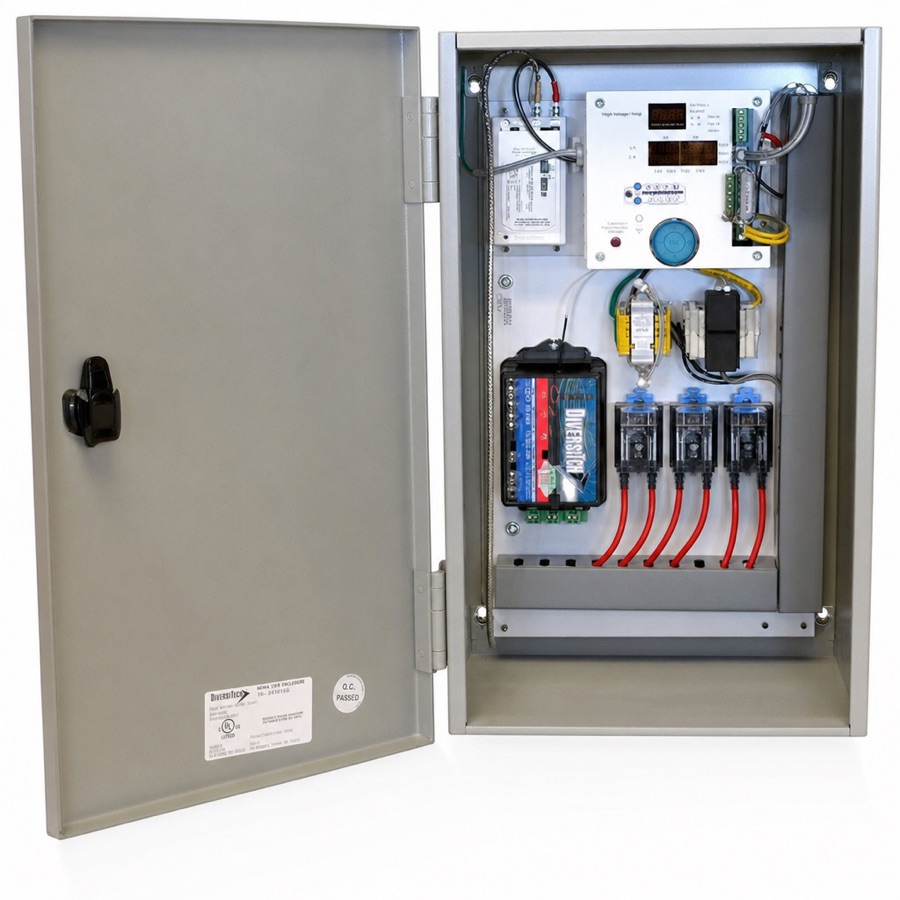
Energy Sentry 9388B: grey steel enclosure, door open, display and control board at top, output relays with red wires belowโœ“ THE CONTROLLER

Energy Sentry 9388B

  • Brayden's own photo, upscaled from a 175 px thumbnail.
  • Door open: display and knob top, 8 output relays bottom.
  • Brayden Automation, Loveland CO, since 1978.
  • Steel box: 18 x 12 x 4 in indoor (NEMA 1) or 12 x 10 x 4 in hinged outdoor-rated (NEMA 3R), 120 VAC.
  • Knob sets the limit, display shows live kW, red relays are the 8 outputs.
  • 3-year warranty.
Product page ยท Brayden ยท (970) 461-9600
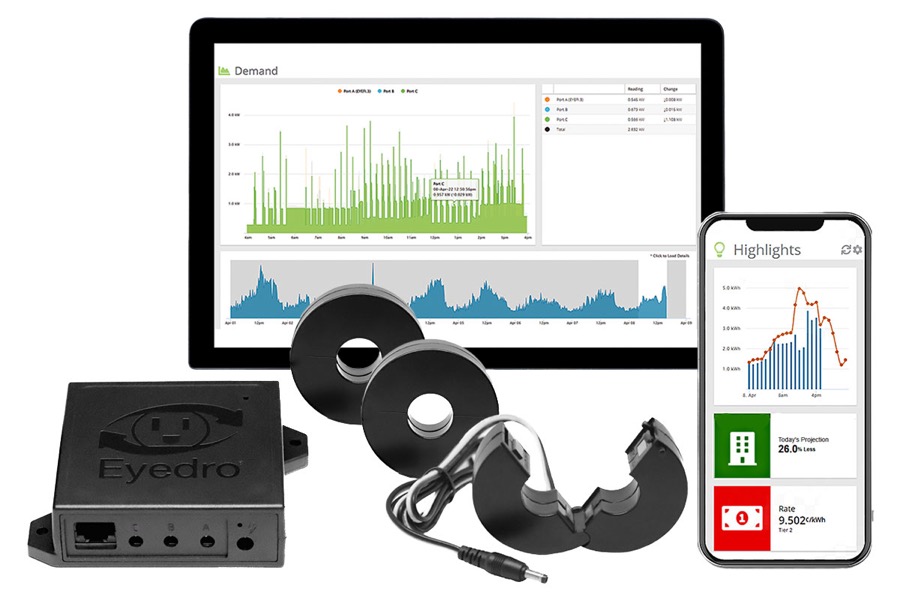
Eyedro EB6-EW-E3 energy meter with three current clampsโœ“ WEEK 1 MONITOR

Eyedro EB6-EW-E3

  • Same kind of clamps, no switching. Shows the 15-min curve live on a phone.
  • Alert when the average crosses 16 kW.
  • Goes in first so the shed order is set from real data.
Product page
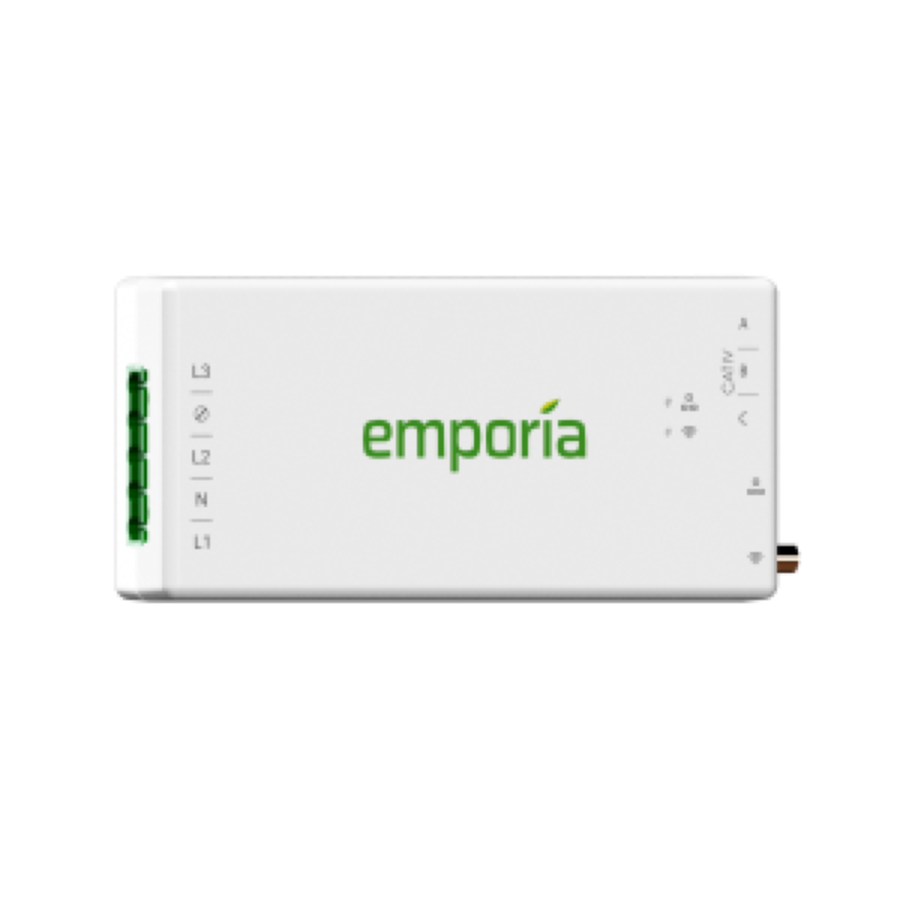
Emporia Vue 3 energy monitor! ALTERNATIVE

Emporia Vue 3

  • Cheaper, 16 circuit clamps, per-AC view.
  • Consumer app, fewer commercial alert options.
Product page
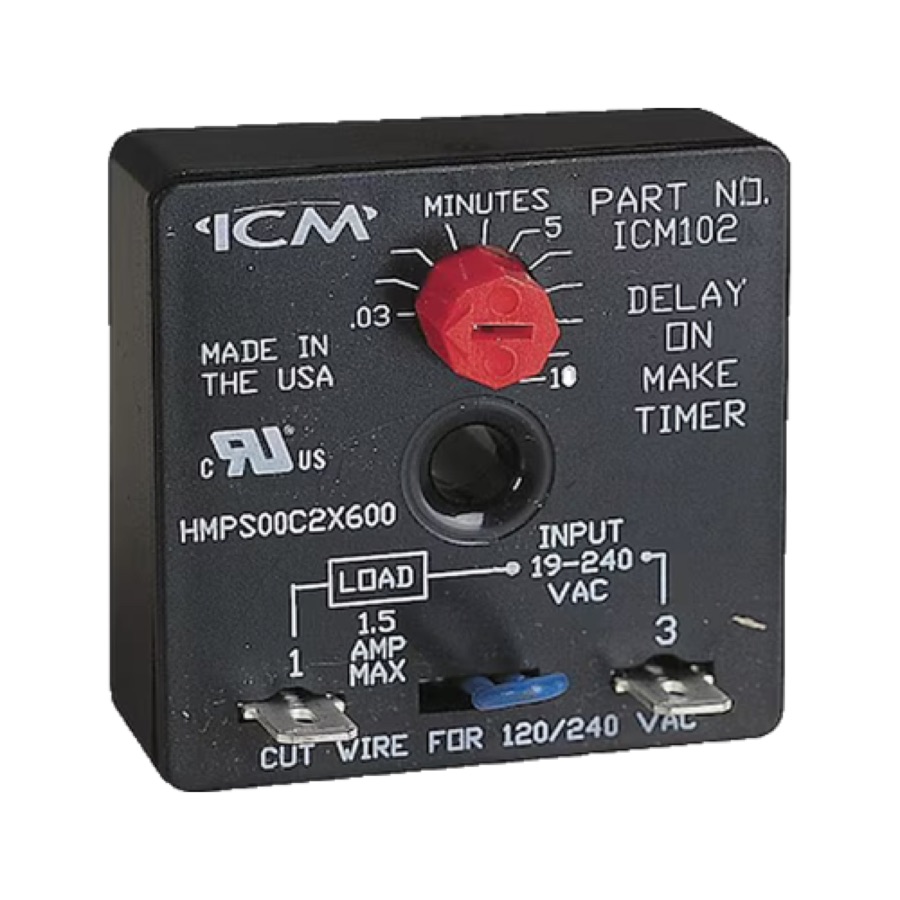
ICM102 delay-on-make timer! CHEAP INSURANCE

ICM102 delay-on-make

  • Staggers compressor restarts after a power blip so seven units never start at once.
  • Does nothing for the 15-min average by itself.
ICM Controls ยท Jackson Systems
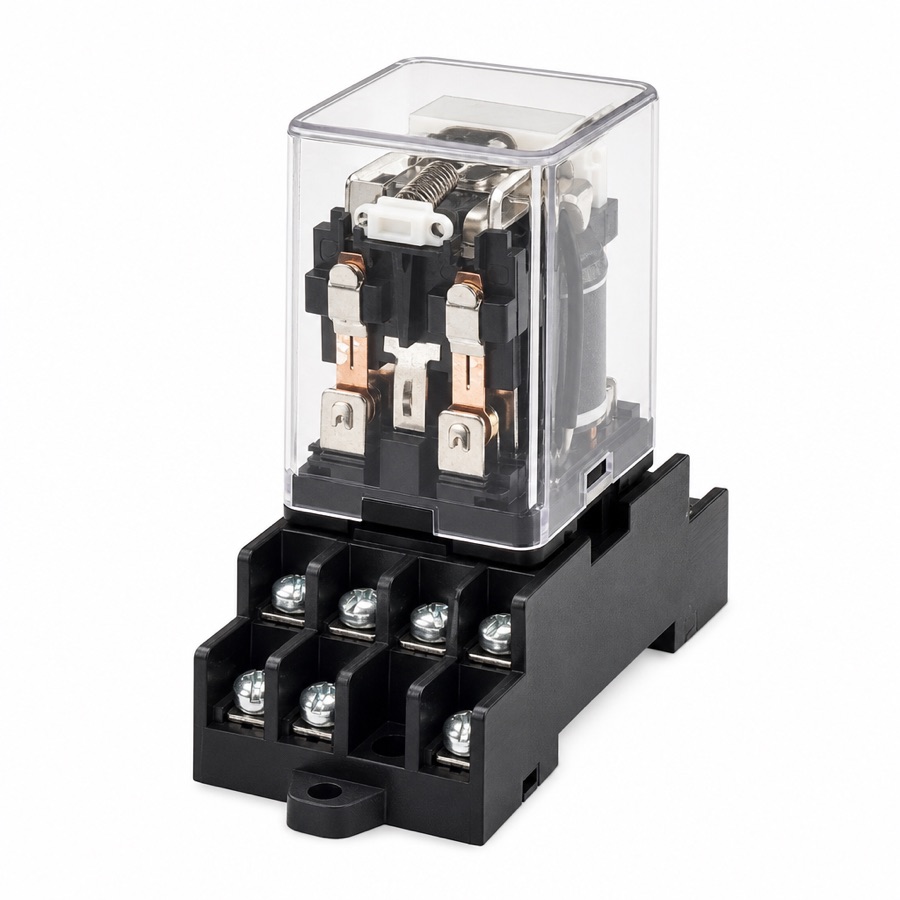
24 VAC pilot relay on a socket baseโœ“ PER AC

3 A pilot relay, 24 VAC coil

  • One per condenser, wired in series with the thermostat Y wire at the unit.
  • Off-the-shelf HVAC relay; the electrician supplies it. Image is a generic render of the part type.
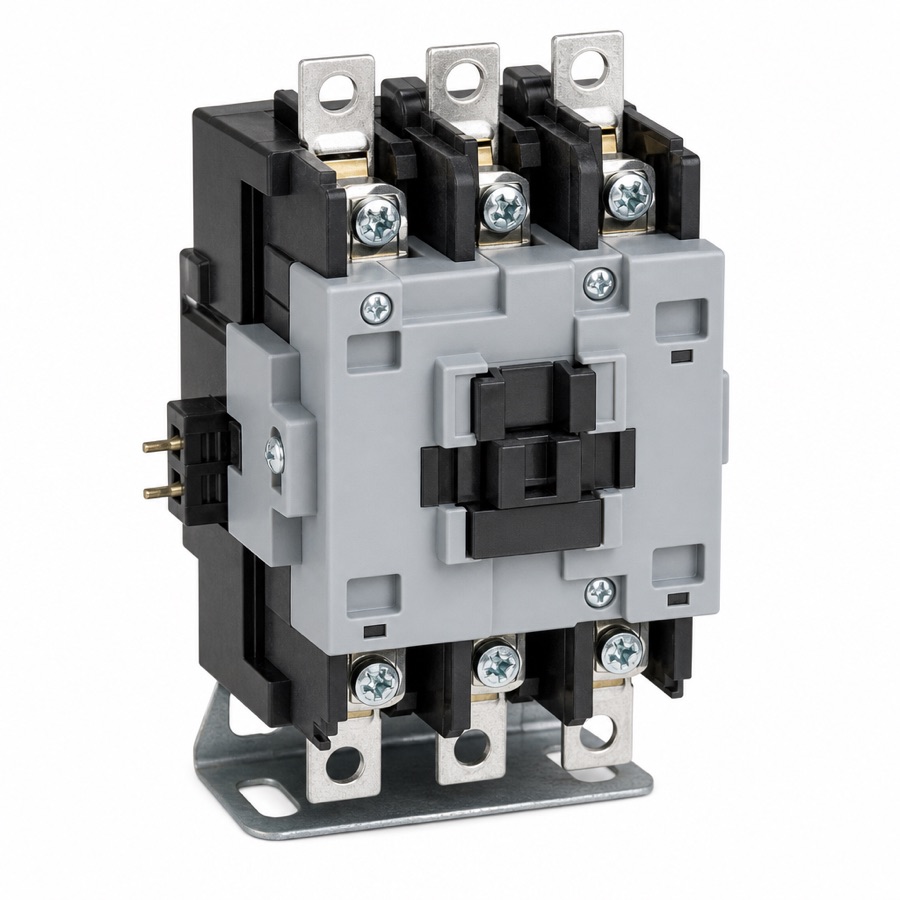
3-pole 50 A definite purpose contactorโœ“ SAUNA

50 A contactor for the sauna heater

  • Line-voltage thermostat, no 24 V wire: its output drives a 3-pole contactor instead.
  • 9 kW at 240 V = 38 A, so a 50 A contactor.
  • Lowest priority: it is the first thing shed. Image is a generic render of the part type.
โœ“ NO ROOF WIRE?

WireLynx powerline carrier

  • Brayden's option to send the shed signal over the existing power wiring to rooftop units.
  • Ask for it in the quote if pulling 24 V wire to the roof is ugly.
Brayden products

๐Ÿ“Š A hot TRC Saturday, limit set to 18 kW

Loads from the load inventory. Orange line = 18 kW limit. Twenty is a number the meter never gets to see.

4:00 pm, base 3 kW + 3 ACs (4 kW each)
15.0
4:05 sauna on (+6)
21.0
4:07 average climbing toward 18, shed sauna
15.0
4:20 AC 4 + AC 5 call (+8)
23.0
4:22 average climbing, shed AC 5 (least important)
19.0
4:22:04 shed AC 4
15.0
4:24 AC 1 satisfied, stops on its own
11.0
4:28:04 restore AC 4 (6-min minimum off done, 11 + 4 = 15 leaves room under 18)
15.0
Highest 15-min average of the hour (4:07 to 4:22)
16.1
4 s

between sheds once it starts cutting. It starts while the average still has room, so the average never reaches 18.

6 min

longest a shed AC stays off before it is eligible to come back (large compressor).

0

windows over 18 kW possible from controlled loads, by construction.

โš ๏ธ What it cannot do, and what the plan does about it

โœ• UNCONTROLLED LOADS

It only switches what is wired to it

  • Tesla charger: capped at 12 A (2.8 kW) inside the Wall Connector and counted as a fixed 2.8 kW in the 18 kW budget.
  • Sauna: controlled through a contactor (above).
  • Anything plugged into a wall outlet counts toward the limit but cannot be shed.
! COMFORT ON PEAK DAYS

Shed ACs mean warmer rooms

  • At 18 kW on a 100 F day, two or three ACs may rotate off for 5-minute stretches.
  • Priority order decides who sweats: studios first, offices and hallways last. Set in Week 1 with Taji.
! STILL NEEDS A HUMAN

Priorities and the limit are settings

  • The knob can be turned. Lock the box; only Taji and the electrician change it.
  • Lock dC at 1. Any other algorithm accepts some risk of the average passing 18.
  • Verify every month against the SCE bill's demand line until the PCOC clears.

โœ… Same box, same job, for decades

Jim's Automotive

Under a 25 kW threshold since 1997.

Abundant Grace church

Two ACs held under 25 kW; bill from about $800 to $80 a month.

Journey Church

Six ACs plus five heat loads held under 37.5 kW, about $6,000 a year saved.

WOW!

Five ACs held under 25 kW.

All four from Brayden's own customer profiles. They are the vendor's case studies, not audited numbers.

๐Ÿ” Spec sheet, 9388B
ItemValue
Models9388BA single-phase CTs ยท 9388B3 three-phase CTs ยท 9388BP utility pulse
Demand limit9388BA 40/80 kW ยท 9388B3 50/100/200 kW ยท settable 4 to 99 percent (0.4 kW steps at 40, 0.5 at 50)
Averaging interval15 / 30 / 60 min, continuous sliding window
Calculation updateunder 1 s
Outputs8 relays, expandable to 16
Shed / restoreshed every 4 s while over ยท restore about 1 per min
Control algorithmdC 1 to 5 ยท TRC uses 1 (least overshoot risk, per manual)
Min off / min on4/5/6 min off ยท 5/6/7 min on (small/medium/large compressor)
AC control3 A pilot relay in series with the 24 VAC thermostat Y wire
EnclosureNEMA 1 steel 18 x 12 x 4 in (indoor) or NEMA 3R 12 x 10 x 4 in (outdoor), 120 VAC
Warranty3 years
MakerBrayden Automation Corp, Loveland CO ยท (970) 461-9600 ยท sales@brayden.com. Brayden's site now routes Energy Sentry sales to Interactive Energy Systems, 833-766-8005; ask who quotes the commercial 9388B and use whichever answers.
๐Ÿ” Why not a smart panel, a thermostat schedule, or a battery
  • Smart thermostat schedules cannot see the building total, so seven of them can all call at once.
  • Consumer smart panels (Span, Lumin) switch circuits but have no 15-minute-average setpoint logic.
  • Batteries can shave peaks (Sol-Ark has a grid setpoint) but cost 3 to 5 times more and need the same monitoring anyway. Detail in the alternatives report.